

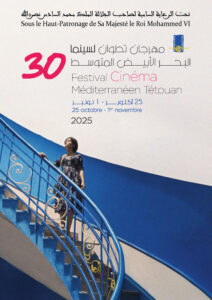
30th edition
The Tetouan Cinema Festival is giving a public meeting for the 29th edition, scheduled for April 27 or May 4, 2024, in the afternoon of the 28th edition with the launch of the Tetouan workshops, the programming of the Tetouan Industry Day and the Talents in Progress program.
Next year, the festival will host its main activities and will include new applications for the promotion of the art of the 7 days. Thus, the Festival Foundation invites the public and community leaders to participate in screenings, preparations, round tables and workshops on modern construction and construction, of which we also support by telephone the perspective and the consolidation of the existing—rooms, worthy of its thousand-year-old history.
This 29-day edition of the Festival includes the latest editions of the programs organized since the start of a new residency at the Superior Art and Cinema Studios in Morocco. These components aim, in particular, to help young creative actors pay the media to realize their projects and send them to the cinema as a transport choice.
opening and closing films
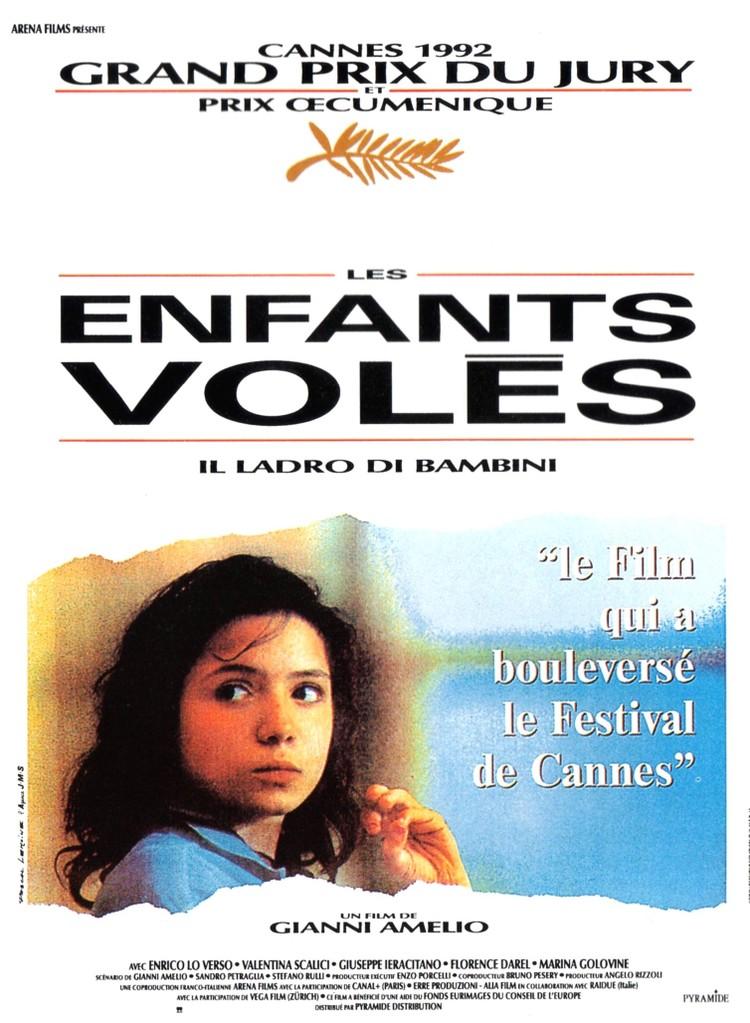
Opening film
- Il ladro di bambini film de Gianni Amelio , Italie ,1992, 114mn
long films competition
1. Vermiglio ou la mariée des montagnes, de Maura DELPERO, Italie, France, Belgique, 2024, 119’.
2. Il tempo che ci vuole, de francesca COMENCINI, Italie –France, 2024, 110’.
3. Mammifère, de Liliana TORRES, Espagne, 2024, 93’.
4. Le lac bleu, de Daoud AOULAD-SYAD, Maroc, 2024, 85’.
5. Sonate nocturne, de d’Abdeslam KELAI, Maroc, 2024,112’.
6. Bande sonore d’un coup d’État, de Johan GRIMONPREZ, France, Belgique, 2024, 150’.
7. La Guitarra Flamenca de Yerai Cortés, de Antón ÁLVAREZ, Espagne, 2024, 95’.
8. Le Royaume, de Julien COLONNA, France, 2024, 108’.
9. Evcilik, de Ümit ÜNAL, Turquie, 2024, 100’.
10. Thérapie familiale, de Sonja PROSENC, Slovénie, Italie,Croatie, Norvège, Serbie, 2024, 122’


our favorites
1. Vers une terre inconnue, de Mahdi FLEIFEL, Grèce, Danemark, Royaume-Uni, Pays-Bas, 2024, 105’.
2. Un oiseau du paradis, de Mourad BEN CHEIKH, La Tunisie et Italie, 2024, 90’.
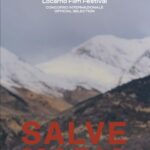
3. Salut maria, de Mar COLL, Espagne, 2024, 111’.
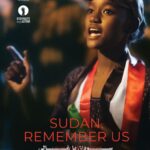
4. Soudan, souviens-toi de nous, de Hind MEDDEB, France, Tunisie, Qatar, 2024, 76’
[/vc_colum

n_text]
MEETING 1 : Comédies en Méditerranée, Normes, Écarts
For at least two decades, awards and programming in major festivals provide tangible evidence that national cinematography is undergoing a phase of fruitful experimentation and exploration. Alongside relevant and necessary praise and celebration, below are some observations and suggestions for general inquiries that may provide perspective on the phenomenon, perhaps indicating a relative but real breakthrough.

Speakers :
Mohammed Bakrim – Cinema critic
Rosario Pardo – Actress
Oussama ABDEL FETTAH – Film Critic and Author
Catarina GUZZANTI – Actress
MODERATOR
Said MEZZOUARI– Cinema Critic
MEETING 2 : Femmes cinéastes en Méditerranée : la nouvelle vague
Former editor-in-chief of the magazine Cinéma 3, a title praised by Roland Barthes in the dedication of his essay:Le troisième sens (1971), Nourredine Saïl made a mark in 2019. During an interview on the state of national cinema amidst the recent global health crisis, he paused to reflect on Eric Rohmer’s cinematic experience, citing the DVD of the feature film Pauline at the Beach (1983): Small budget, big ideas for a grand film, he essentially said to his interlocutor. This «freeze frame» was surprising given the rare presence of E.R. in the cinephile references cherished by N.S.
Speakers :
Hind MEDDEB – Director
Zakia TAHIRI – actress
Laura SAMANI – Director
MODERATOR :
Anwar OUYACHI – University Researcher
Tributes
Aida Folch
![]()

A star coveted by many skies
She entered the world of acting
as a young girl. At just fourteen
years old, director Fernando
Trueba chose her for his film The
Shanghai Spell, opening the doors
of cinema for her. Soon after,
director Fernando León de Aranoa
cast her in his film Mondays in the
Sun, and her film career quickly
took off, earning widespread
acclaim.
Television made her a familiar
face in Spanish households,
particularly through her role in the
series Tell Me How It Happened
alongside star Imanol Arias.
Internationally, she appeared in the
historical film Henry IV directed by
German filmmaker Jo Baier and
took on acting roles in Mexico. In a significant career shift, Trueba cast her once again—this time as the
lead in The Artist and the Model, filmed entirely in French alongside French star Jean Rochefort and Italian
legend Claudia Cardinale. Her performance earned her a «Best Actress» nomination at the 2013 Goya
Awards, cementing her talent.
She continued working in television before starring in the 2014 film Fire alongside José Coronado, a
story that explores the consequences of extremism and social injustice.
Today, Aida Folch is developing several upcoming projects, and her career continues to thrive thanks to
her remarkable artistic energy
In 2008, he shared the lead role with Ata Demirer in the film “Ottoman Republic” written and directed by Gani Müjde. In 2013, Hasan Kaçan, Şebnem Sönmez, Cezmi Baskin, Fırat Tanış, Vildan Atasever and Burak Satıbol starred together in the movie “Exile Cow”.

Eyad Nassar
A radiant artistic trajectory
Eyad Nassar is an artist whose
identity intersects with multiple
Arab affiliations (Saudi Arabia,
Palestine, Jordan, and Egypt). A
radiant and responsible artist, he
does not hesitate to experiment
and take on challenging roles.
Adventurous, respectful of his craft
and of the pioneers who came
before him, he is also a cultivated
artist with true artistic intelligence.
He also makes sure to invest his
image in humanitarian initiatives.
Eyad Nassar chooses his projects
carefully, diversifies his registers,
and trusts his intuition when
making decisions. His first passion
HOMMAGES
was the visual arts, particularly
sculpture, before turning to
television and later to cinema. A
pivotal moment in his career was his role in the series Al-Gama‘a (2010), written by Wahid Hamed, in
which he brilliantly embodied Hassan al-Banna, founder of the Muslim Brotherhood. This performance
marked a true breakthrough for his fame and made the work a subject of both critical and popular
debate. He received several prestigious awards and earned the admiration of both audiences and critics.
In cinema, Eyad Nassar distinguished himself in Kaf al-Qamar by Khaled Youssef, Turab al-Mas (adapted from
Ahmed Mourad’s novel), as well as in Al-Mamar, where he portrayed an Israeli officer—an audacious choice that
revealed his ability to play dark roles while avoiding stereotypes. In El-Ba‘d La Yazhab Lil-Ma’zoun Maratayn
(2021), alongside Karim Abdel Aziz, he returned to social comedy, once again confirming his refusal to be
confined to a single genre. With Al-Bab al-Akhdar, the final work of the great Osama Anwar Okasha, he ventured
into science fiction, while Sa‘a Wa Nos offered a poignant depiction of the suffering of Egypt’s working classes.
Known for his constant pursuit of novelty and his taste for artistic risks, he moves with ease between
romance, psychological drama, historical, and political works. This versatility has brought him closer to
the public, who maintain with him a relationship of respect and closeness. He does not aim solely for
commercial success but also strives to offer works that spark debate on pressing social and political issues.
Ultimately, Eyad Nassar’s artistic journey captivates with its strength and originality. It transcends borders,
rejects ease and complacency, and connects art to its psychological, social, and human dimensions,
demonstrating that cinema is not a luxury but a necessity—a response to deep, collective as well as
individual needs
Nabil Ayouch
Nabil Ayouch’s cinema both
entertains and enlightens.

The Moroccan director Nabil
Ayouch holds a unique place
in the Moroccan cinematic
landscape. His films, which leave
no one indifferent, stand out for
their great technical mastery, a
keen sense of citizenship, and a
strong grounding in their historical
context. His cinema engages the
viewer, challenges their certainties,
and seeks to push them out of their
«comfort zone.» In this sense, Nabil
Ayouch, an engaged creator in his
own way, is constantly attuned to
the conflicts, struggles, sufferings,
and concerns of his time. His films
take a stand while questioning the
audience, denouncing, meditating,
and condemning. They avoid any
artificial formal experimentation, relying instead on an aesthetic that is both accessible and demanding,
which explains his popularity and success with the general public, international festivals, and critics.
reduce to Far from being moralistic or preachy, Nabil Ayouch is, above all, an accomplished filmmaker. His
films entertain and enlighten, stimulating our senses while prompting us to reflect and take a stance on
certain social phenomena and issues. In his first feature film, Mektoub )1997(, he lays out the key elements
of his artistic vision: adopting the road movie genre while incorporating sharp social critique and elements
of a thriller. The film revisits, with some adjustments, a societal and moral scandal that shook Morocco in
the 1990s, involving high-ranking security officials. It also explores a journey into the depths of Morocco,
highlighting its unique needs.
This process of unveiling reality continues with Ali Zaoua (2000), which tells the story of four homeless
children bound by a deep friendship that helps them endure a world governed by its own rituals and laws,
in the unseen corners of Casablanca. Notably, the children in this film, which dissects deprivation and
its consequences, were actually street children chosen to portray their own experiences in a profoundly
moving work. Violence, the rise of hatred, and extremism are often consequences of social deprivation.
This theme is central to Horses of God )2012(, in which Ayouch revisits the May 16, 2003, terrorist attacks
in Casablanca, attempting to answer pressing questions: How does one become a terrorist? At what
point does someone shift towards extremist groups that exploit their energy? The film highlights the link
between radicalization, social precarity, lack of future prospects, and the dominance of despair
JURY DE LA COMPETITION OFFICIELLE DES LONGS MÉTRAGES
[/vc_column][/vc_row]

Leonardo Di Costanzo
President of the Jury
Director
Italy

Serge Barbuccia
Jury Member
Actor, Author and Director
France

Amir Ramsiss
jury member
Director
Egypte

Isabel Machado
jury member
Producer
portugal

Asmae El Moudir
jury member
Director, Screenwriter
Maroc
JURY DE LA CRITIQUE - MUSTAPHA MESNAOUI

Cédric Lépine
Membre de jury
critique du cinéma
France

Fatima Al Ifriqui
Membre de jury
journaliste culture
Maroc

Federico Pontiggia
Membre de jury
auteur , critique du cinéma
Italie